
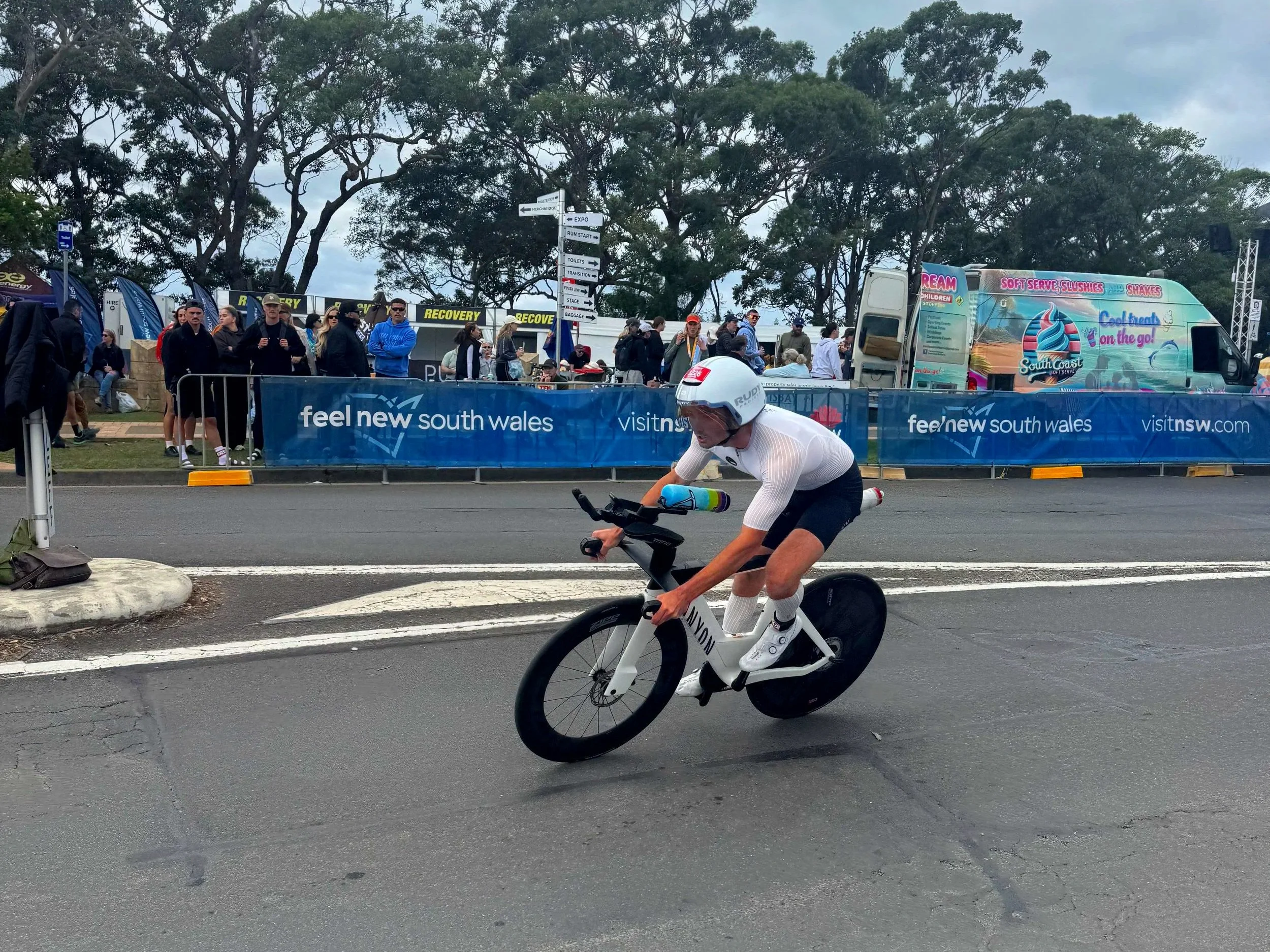
Cycling is one of those sports that responds extremely well to extra effort around training and preparation.
But it’s not a one-dimensional approach of just throwing more work at it.
To really improve, cycling becomes a technical sport. Equipment choices, rider position, skill execution and race awareness all matter. If you want to make the most of your fitness, you need to be across all of them.
Think of this article as a primer to a series. I’ll introduce the key concepts here, and then break them down in more detail in future articles.
Skill Development
Ascending, descending, braking / cornering, cadence and pedalling efficiency.
Triathlon courses are rarely flat and straight. If you want faster bike splits without simply chasing more power, you need to improve how you handle the bike.
Better climbing saves energy. Better descending gives you speed for free. Better braking and cornering maintains momentum. A smoother pedal stroke improves efficiency.
The key point: this can be trained anywhere. Most athletes just don’t prioritise it.
Aerodynamics
This is one of the most misunderstood areas in cycling, and one of the biggest opportunities.
“Free speed” is real, but most athletes never access it properly.
Aerodynamics comes down to two key factors:
Rider position, frontal area and posture (your biggest lever)
Equipment choices like helmets, suits and accessories
The challenge is finding the balance between aerodynamics, comfort and sustainable power.
Testing is critical. It doesn’t need to be complicated. With a power meter and some structure, you can start to understand what actually makes you faster, not just what looks fast.
On-Course Execution
You don’t race in isolation.
There are always other athletes on course, and how you manage that environment is a key performance skill.
This skill is about:
Timing overtakes properly
Managing effort through groups
Staying legal while maintaining speed
Avoiding unnecessary surges and spikes
Athletes who do this well conserve energy and ride closer to their true capacity. The added benefit of that of course is better legs for the run.
The Real Opportunity
Cycling performance isn’t built on one thing. It’s the combination of fitness, skill, aerodynamics and execution.
Most athletes leave significant time on the course not because they aren’t fit enough, but because they haven’t developed these areas alongside their fitness. If this approach saves you a couple of minutes on a sprint course, imagine the time gained over an Ironman.
If you’re serious about improving your cycling, the opportunity is there. Not just to get stronger, but to become more complete.
In the next article, we’ll take one of these areas and break it down into exactly how to train and apply it.